Recommended equipment for flame brazing
Since the principles of flame brazing can be explained using the most basic equipment, only the equipment necessary for manual flame brazing is described. From the basic principles, all other equipment is only a matter of the degree of automation the end user wishes to achieve.
Hardware
Torch
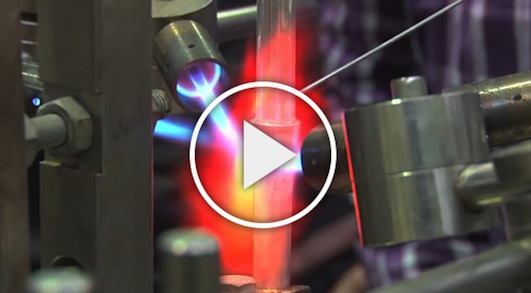
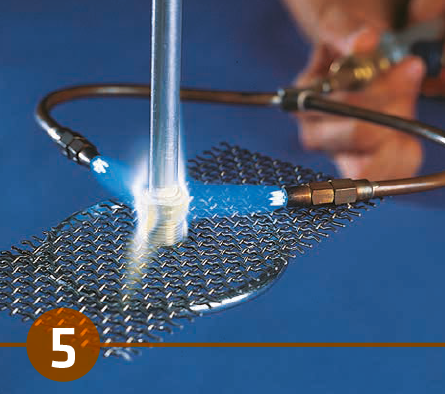
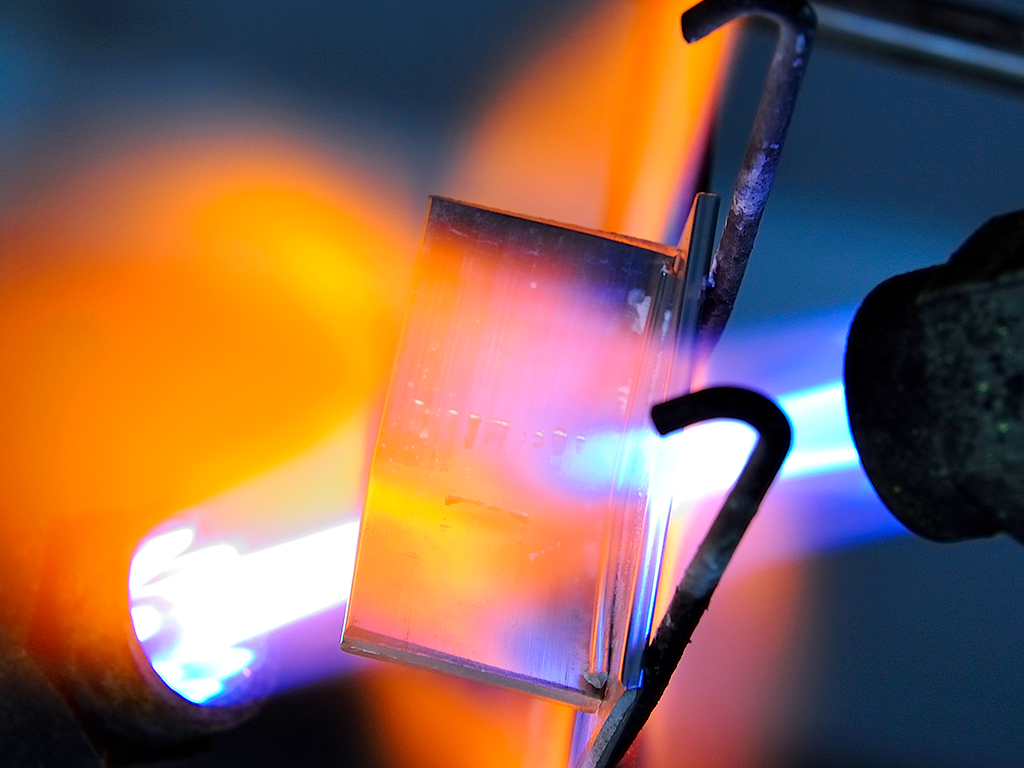
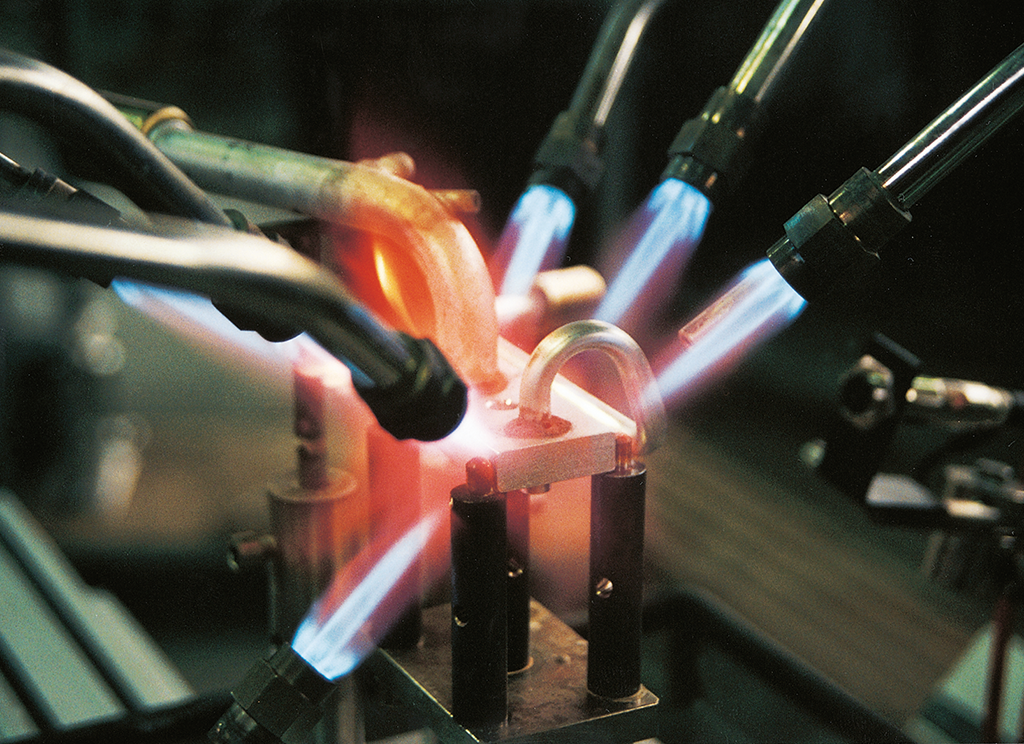
It is critical that the joint area is brought up to temperature uniformly. For this reason a dual headed torch capable of heating the joint from 2 sides is recommended.
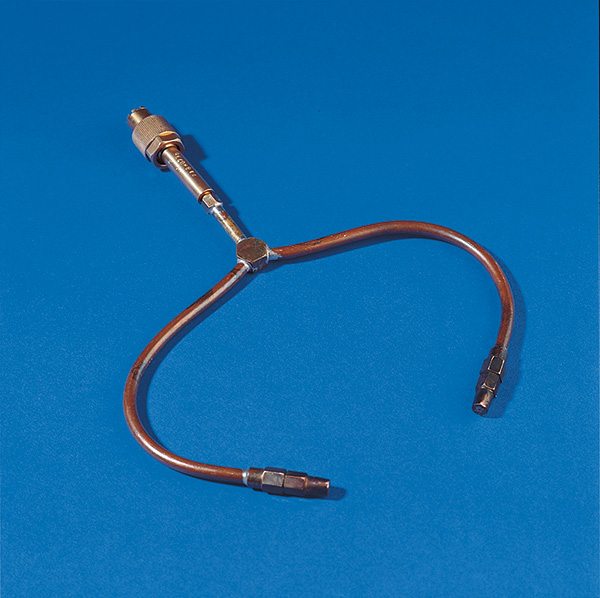
Torch Tip
A multi-orifice tip generates a broader flame at the exit of the tip. This feature enhances component temperature uniformity during heat up. Pin-point flames should be avoided as burn-through can easily occur.
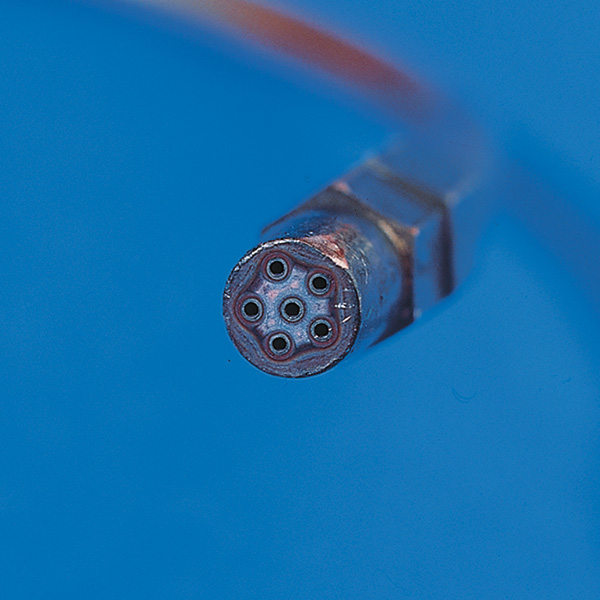
Consumables
Gas
Most commercial gas mixtures are acceptable for flame brazing Al:
- oxygen – propane
- oxygen – methane
- oxygen – natural gas
- oxygen – acetylene (oxyacetylene)
- Oxyacetylene combination produces the hottest flame and may be used, but with extreme care to avoid overheating and burn-through.
Filler Metal
The filler metal alloy most commonly used for flame brazing Al is AA4047 which contains 11 to 13 % Si. The Al-Si phase diagram shows the eutectic at 577 °C with 12.6 % Si. AA4047 filler alloy therefore has the lowest melting temperature with the highest fluidity, ideal properties for flame brazing Al.
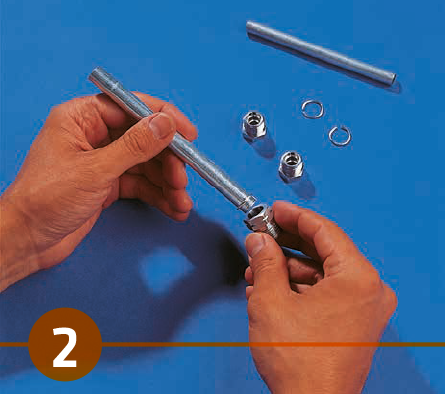
The filler metal is available in a variety of shapes and forms including wire, rings, foil and powder. When used as a powder, it is usually mixed with flux and a carrier to form a paste (more on pastes below). The filler metal wire is also available commercially either cored or coated with flux, precluding the application of flux.

Brazing Paste
Commercially available brazing pastes consist of the flux, powdered filler metal and a binder/carrier to keep everything in uniform suspension. This paste is all inclusive, there is no need to supply flux or filler metal to the joint separately. Brazing pastes can also be applied with automatic dispensers, with syringes or by brush application.
Flux Paste
This is very similar to brazing pastes except that there is no powdered filler metal present, meaning that flux pastes requires filler metal in one form or another to be added to the joint separately. The advantage of using a flux paste is that the end user does not have to prepare his own paste.
In-House Paste Preparation
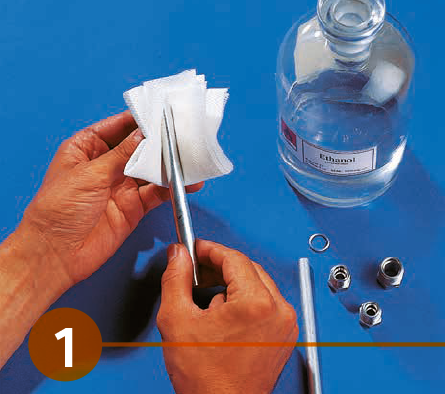
The least expensive and most common is the in-house preparation of flux pastes. The flux is mixed with either water or alcohol and/or water at 40 % to 60 % solids. Using some alcohol in the paste formulation allows for quicker drying. Using pastes prepared in-house of course requires that the filler metal be supplied to the joint separately.
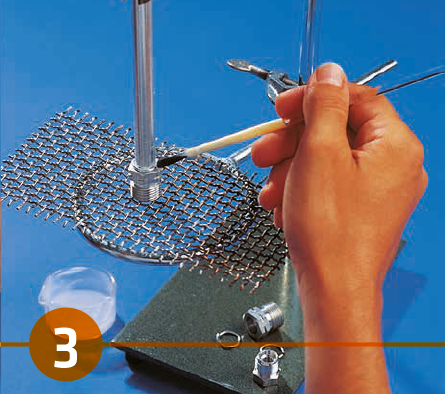
These pastes are not easily dispensable automatically and are most often applied with a brush.
For brazing a tube-to-tube joint, the table below summarizes the complexity level in applying the flux and filler metal in their various forms:
| Flux Cored or Coated Wire |
Brazing Pastes |
Flux Pastes |
In-House Paste Preparation |
| 1. Preplace ring at the joint |
1. Apply or dispense paste
at the joint |
1. Preplace ring at the joint |
1. Prepare paste |
| 2. Braze |
2. Dry |
2. Apply or dispense paste
at the joint |
2. Preplace ring at the joint |
|
3. Braze |
3. Dry |
3. Apply paste at the joint |
|
|
4. Braze |
4. Dry |
|
|
|
5. Braze |
Go to Part 1
Go to Part 3
Go to Part 4
Go to Part 5